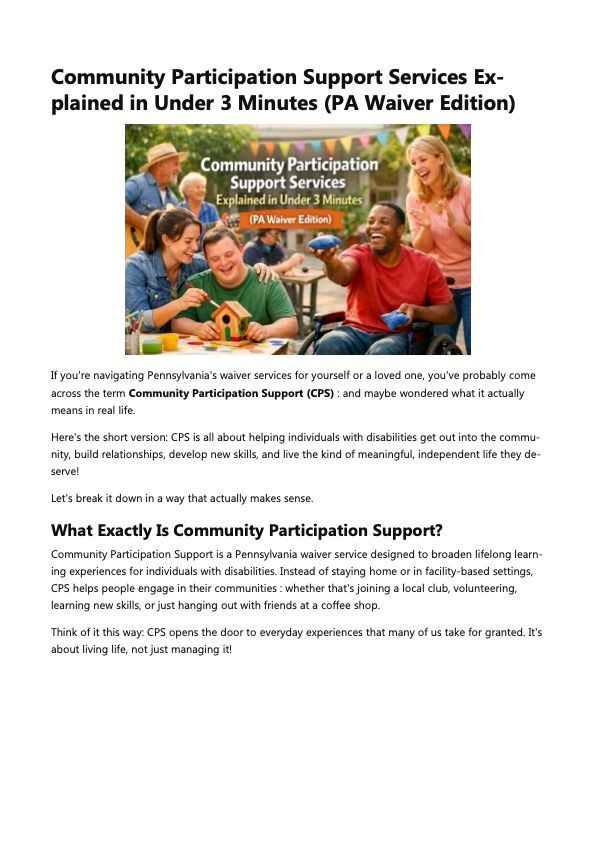
If you're navigating Pennsylvania's waiver services for yourself or a loved one, you've probably come across the term Community Participation Support (CPS) : and maybe wondered what it actually means in real life.
Here's the short version: CPS is all about helping individuals with disabilities get out into the community, build relationships, develop new skills, and live the kind of meaningful, independent life they deserve!
Let's break it down in a way that actually makes sense.
What Exactly Is Community Participation Support?
Community Participation Support is a Pennsylvania waiver service designed to broaden lifelong learning experiences for individuals with disabilities. Instead of staying home or in facility-based settings, CPS helps people engage in their communities : whether that's joining a local club, volunteering, learning new skills, or just hanging out with friends at a coffee shop.
Think of it this way: CPS opens the door to everyday experiences that many of us take for granted. It's about living life, not just managing it!
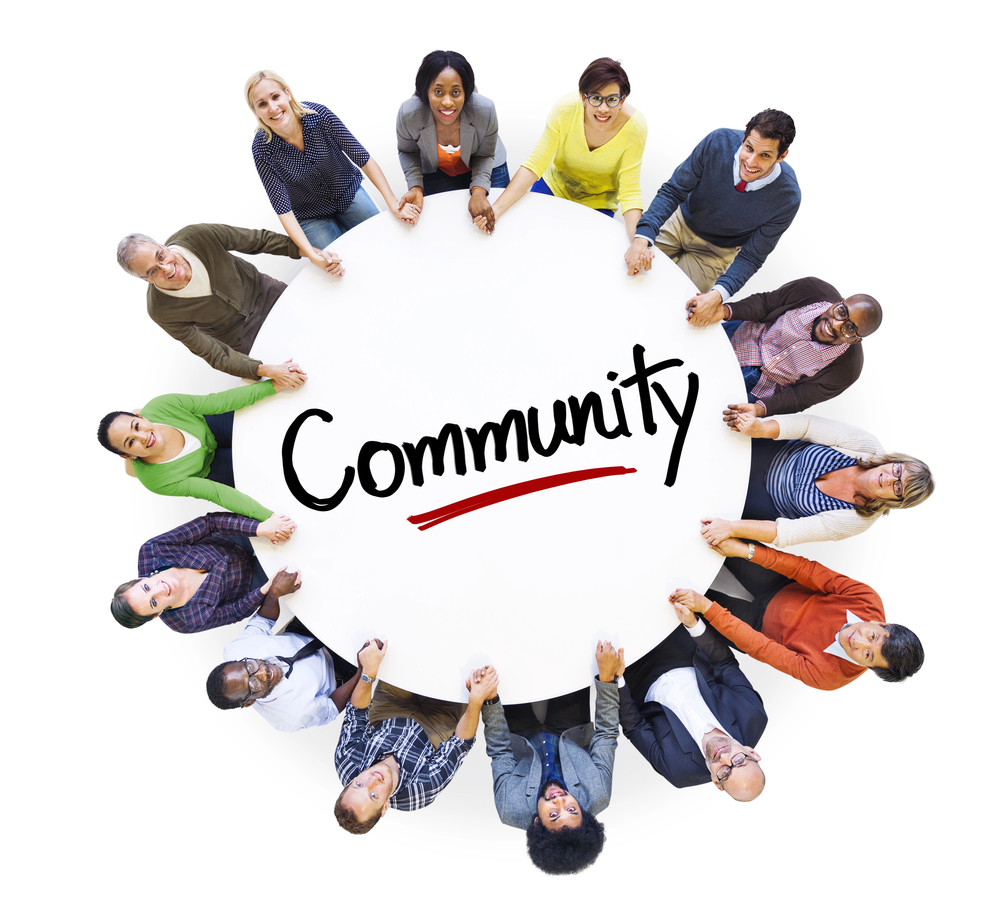
What Does CPS Actually Cover?
Here's where it gets exciting : CPS is incredibly flexible! Services can include:
- Joining community groups, associations, or clubs : Book clubs, recreation centers, faith communities, hobby groups, you name it!
- Prevocational skill development : Building work-readiness skills like time management, communication, and teamwork
- Social networking and relationship development : Making friends, maintaining connections, and building a support system
- Participating in community functions : Festivals, concerts, libraries, museums, sporting events
- Learning to use community resources : Public transportation, grocery stores, banks, and other everyday places
The goal? To help individuals develop the skills and confidence they need to participate fully in their communities : on their own terms.
The 25% Community Time Rule (And Why It Matters)
Here's something important to know: CPS requires that individuals spend at least 25% of their service time in community-based activities on average per month. That's about one out of every four hours!
Why? Because research shows that real community engagement : not just simulated activities in a facility : leads to better outcomes, stronger relationships, and greater independence.
But don't worry : this doesn't mean every single session has to be out in the community. It's calculated as a monthly average, so there's flexibility week to week. Some weeks you might do more community outings, other weeks might focus more on skill-building at home or in a center.
Important note: If you're working at a supported employment job, that time doesn't count toward your 25% community requirement. CPS is about activities outside of work!

Can You Opt Out?
Yes! Pennsylvania offers a variance option if the 25% community time requirement doesn't work for your situation. You might qualify if:
- You receive fewer than 12 hours of weekly services
- You have medical limitations that make community access difficult
- You choose not to participate in community activities
The flexibility is there because every person's journey is different!
How CPS Connects to ODP's "Everyday Lives" Vision
Pennsylvania's Office of Developmental Programs (ODP) operates under a framework called "Everyday Lives" : and CPS is a perfect example of this philosophy in action.
The Everyday Lives principles focus on:
- Community presence and participation : Being part of your neighborhood and community, not separated from it
- Choice and self-determination : You decide what activities matter to you
- Developing and maintaining relationships : Building friendships and connections with people who share your interests
- Respect and dignity : Being valued as a full member of the community
- Growing skills and competence : Learning and developing throughout your life
CPS brings all of these principles to life! Instead of services happening to you, CPS puts you in the driver's seat of your own life.

What CPS Can Look Like in Real Life
Let's get practical! Here are some examples of what CPS might look like for different people:
Sarah, 24, loves animals and wants to learn responsibility. Her CPS supports include volunteering at a local animal shelter twice a week, where she's learning job skills while doing something she's passionate about.
Marcus, 31, is working on his social skills and independence. His CPS includes joining a community bowling league on Thursday nights, taking a cooking class at the recreation center, and practicing public transportation with his support staff.
Jade, 19, is exploring her interests before entering the workforce. Her CPS time includes art classes at a local studio, attending library programs, and participating in a young adult social group at a community center.
See the pattern? CPS is customized to each person's goals, interests, and needs!
Who Can Access CPS Services?
CPS is available through several Pennsylvania waivers managed by ODP, including:
- Consolidated Waiver
- Person/Family-Directed Support (P/FDS) Waiver
- Community Living Waiver
If you're already enrolled in one of these waivers, CPS may be fully covered based on your approved Individual Support Plan (ISP). Your supports coordinator can help you determine if CPS is right for you and how to add it to your plan!
Important Things to Remember
Daily hour limits: There's a combined cap of 14 hours per day when you combine CPS with In-Home and Community Support and Companion services. This ensures services remain appropriate and person-centered.
It's about quality, not just quantity: The goal isn't just to be physically present in the community : it's about meaningful participation, skill development, and building relationships that matter to you.
You're in control: CPS follows your interests and goals. Don't like crowds? We can find quieter community activities. Love being around people? We'll help you find vibrant social opportunities!

Getting Started With CPS
If Community Participation Support sounds like something that could help you or your loved one live a fuller, more connected life, here's what to do next:
Talk to your supports coordinator about adding CPS to your Individual Support Plan. Come prepared with ideas about what community activities interest you!
Choose a provider that aligns with your values and goals. At Safe Social Space Therapeutic Services, we're passionate about helping individuals build real connections and develop skills through meaningful community engagement.
Start planning! Think about what you want your life to look like. What activities have you always wanted to try? What skills do you want to develop? Who do you want to connect with?
You Deserve an Everyday Life!
Community Participation Support isn't just another waiver service : it's an opportunity to live the life you want, build relationships that matter, and develop skills that lead to greater independence.
Whether you're just starting your journey with Pennsylvania waiver services or you're looking to add more meaningful community experiences to your current supports, CPS can be the bridge to a richer, more connected life.
Ready to learn more about how Safe Social Space can support your community participation goals? Reach out to us today : we'd love to hear about your interests and help you take the next step toward your everyday life!
">
Community-Participation-Support-services-explained-in-under-3-minutes-pa-waiver-edition
Lati`a Sheppard-Wilson